What Is a Chest Size Calculator?
A chest size calculator estimates your chest circumference using measurements such as height, weight, and age. Instead of requiring you to measure your chest with a tape, it predicts an approximate chest measurement from the information you enter.
This calculator is designed for adult men. It estimates chest circumference in inches and centimeters and provides approximate men's shirt, T-shirt, and suit jacket sizes.
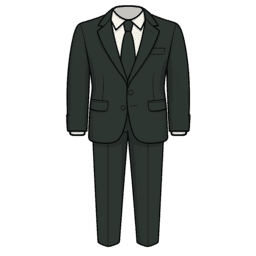
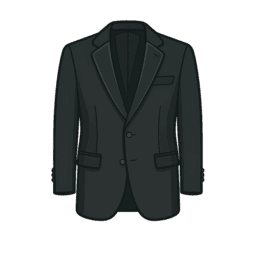
Chest circumference is an important measurement for choosing men's upper-body clothing. It is commonly used when sizing shirts, jackets, blazers, suits, and waistcoats.
The result is an estimate, not a physical measurement. This calculator uses a model developed for male subjects and is not intended for women's bust sizing or children's clothing.
How to Use the Chest Size Calculator
- Choose US or Metric measurement units.
- Enter your height in feet and inches or centimeters.
- Enter your current body weight in pounds or kilograms.
- Enter your age in years.
- Click Estimate Chest Size to calculate your predicted chest circumference.
The calculator returns an estimated chest circumference in both inches and centimeters, along with approximate men's top and suit jacket sizes.
You do not need to know your chest measurement before using this tool.
How Does the Chest Size Calculator Work?
The calculator uses a published statistical regression equation to estimate men's chest circumference from height, weight, and age.
The equation was published in the 2022 research paper Predicting User's Measurements without Manual Measuring: A Case on Sports Garment Applications.
The researchers investigated whether body circumferences could be estimated using information that people commonly know without measuring themselves.
The study focused on predicting measurements relevant to sports garments, particularly cycling clothing.
This calculator uses the published male chest circumference regression equation, rather than a general rule of thumb.
Measurements Used in the Calculation
| Input | Purpose |
|---|---|
| Height | Provides information about overall body stature. |
| Weight | Helps predict body size and circumference. |
| Age | Accounts for age-related patterns in the model. |
Internally, the regression equation uses height in millimeters, weight in kilograms, and age in years.
The predicted chest circumference is calculated in millimeters, then converted into inches and centimeters for display.
The resulting chest estimate is compared with men's clothing size charts to suggest approximate sizes.
How Accurate Is a Chest Size Estimate?
Chest circumference can be estimated statistically, but no model can determine every person's exact body measurement from height, weight, and age alone.
In the published study, the male chest circumference regression model reported a root mean squared error (RMSE) of 24.7 millimeters, or approximately 2.47 centimeters.
RMSE is a statistical measure of prediction error. It does not mean that every person's chest size will be estimated within 2.47 centimeters. Individual errors may be larger.
Two people of the same height, weight, and age can have different chest circumferences because of differences in body proportions, muscle development, and body composition.
The original research involved a particular study population and application. Its reported accuracy should not be treated as a guarantee for every person or clothing category.
For fitted suits, dress shirts, and tailored garments, directly measuring your chest is more reliable than using an estimate.
Does Body Type Affect Chest Size?
Yes. Body proportions can affect chest circumference even when height and weight are the same.
For example, someone with more developed chest and upper-back muscles may have a different chest measurement from someone of similar height and weight with a different body composition.
People also describe their builds using terms such as slim, average, athletic, or broad.
However, these categories are subjective and do not correspond to precise chest measurements.
The research model used by this calculator does not include body type as an input.
For that reason, the calculator does not automatically add or subtract inches based on a selected body type.
How to Measure Your Chest Size
If you have a flexible measuring tape, directly measuring your chest is generally the most reliable way to determine your circumference for clothing.
- Stand naturally. Keep your arms relaxed at your sides.
- Wrap the tape around your chest. Position it around the fullest part of your chest, under your arms.
- Keep the tape level. Make sure it runs horizontally across your shoulder blades.
- Keep the tape comfortably snug. It should touch your body without squeezing your chest.
- Record the circumference. Read the measurement where the tape meets.
Breathe normally while measuring. Avoid deliberately expanding your chest or holding your breath.
Do not add extra inches to the body measurement. Garment manufacturers account for additional room when creating their clothing patterns.
For additional upper-body measurements, try our Sleeve Length Calculator .
Men's Chest Size Chart
Men's casual shirts and T-shirts commonly use letter sizes such as Small, Medium, Large, and Extra Large.
The following chart uses published men's top-sizing measurements from Nike's men's top size guide as a reference.
These ranges are not universal clothing standards. Other brands may use different measurements and fits.
| Men's size | Chest (inches) | Chest (cm, approx.) |
|---|---|---|
| XXS | 28.1–31.5 | 71.4–80.0 |
| XS | 31.5–35 | 80.0–88.9 |
| S | 35–37.5 | 88.9–95.3 |
| M | 37.5–41 | 95.3–104.1 |
| L | 41–44 | 104.1–111.8 |
| XL | 44–48.5 | 111.8–123.2 |
| XXL | 48.5–53.5 | 123.2–135.9 |
| 3XL | 53.5–58 | 135.9–147.3 |
| 4XL | 58–63 | 147.3–160.0 |
The calculator uses these reference ranges to estimate your letter clothing size.
When a measurement is near a size boundary, compare neighboring sizes and consult the specific manufacturer's size chart.
For a more detailed recommendation, use our T-Shirt Size Calculator .
Chest Size to Shirt Size
Chest circumference is commonly used to estimate men's casual shirt, polo shirt, and T-shirt sizes.
For example, someone with a 40-inch chest may wear a Medium shirt according to the reference chart above.
However, clothing sizes vary by brand and fit. A slim-fit shirt may feel different from a relaxed-fit shirt even if both are labeled Medium.
Men's dress shirts commonly use neck circumference and sleeve length as their primary sizing measurements.
For dress shirt recommendations, visit our Dress Shirt Size Calculator .
Chest Size to Suit Jacket Size
Men's numeric suit jacket sizes in the United States and United Kingdom commonly correspond approximately to chest circumference in inches.
For example, a 40-inch chest often corresponds to a starting jacket size of 40.
If the chest circumference falls between common even-numbered jacket sizes, rounding upward provides a general starting point.
This is only an approximate recommendation. Jacket fit also depends on shoulder width, waist circumference, sleeve length, and overall body proportions.
Jacket sizes may include Short, Regular, or Long length designations.
For example, 40S, 40R, and 40L describe different jacket lengths.
Chest circumference alone cannot determine the correct jacket length.
For a more complete recommendation, use our Suit Jacket Size Calculator .
US, UK, and European Jacket Sizes
Men's suit jackets use different numeric sizing systems in the United States, United Kingdom, and continental Europe.
For example, a US/UK size 40 jacket often corresponds approximately to EU size 50.
| US/UK size | EU size |
|---|---|
| 36 | 46 |
| 38 | 48 |
| 40 | 50 |
| 42 | 52 |
| 44 | 54 |
| 46 | 56 |
| 48 | 58 |
| 50 | 60 |
| 52 | 62 |
| 54 | 64 |
| 56 | 66 |
These conversions are approximate. Specific manufacturers may use different size charts.
For more sizing conversions, visit our Suit Size Converter .
Chest Size in Inches and Centimeters
Chest circumference can be measured in either inches or centimeters.
The conversion factor is straightforward: one inch equals exactly 2.54 centimeters.
To convert centimeters into inches, divide by 2.54.
Common Chest Measurement Conversions
| Chest (inches) | Chest (cm) |
|---|---|
| 32 | 81.3 |
| 34 | 86.4 |
| 36 | 91.4 |
| 38 | 96.5 |
| 40 | 101.6 |
| 42 | 106.7 |
| 44 | 111.8 |
| 46 | 116.8 |
| 48 | 121.9 |
| 50 | 127.0 |
| 52 | 132.1 |
| 54 | 137.2 |
The calculator automatically displays both units, regardless of whether you enter your height and weight using US or metric measurements.
Can Height and Weight Predict Chest Size?
Height and weight provide useful information about body size, but they cannot uniquely determine a person's chest circumference.
People with the same height and weight can have different measurements because of differences in body composition and proportions.
Statistical models can estimate a likely circumference based on patterns observed in research data.
These models are most useful as starting points when direct measurements are not available.
If you want to estimate a complete suit size from body measurements, use our Suit Size Calculator by Height and Weight .
Body Chest Size vs. Garment Chest Size
Your body chest circumference is different from the circumference of a finished shirt or jacket.
Clothing generally includes additional room for movement, comfort, and the intended fit.
This extra room is commonly called ease.
For example, a shirt measuring 21 inches across the chest when laid flat has an approximate garment circumference of 42 inches.
That does not necessarily mean the shirt is intended for a person with a 42-inch body chest.
The difference between body and garment measurements depends on the garment style and manufacturer.
The Chest Size Calculator estimates body circumference, not finished garment dimensions.
Chest Size vs. Waist Size
Chest and waist measurements are both important for clothing fit, especially suits and formalwear.
Chest circumference is commonly used to estimate jacket size.
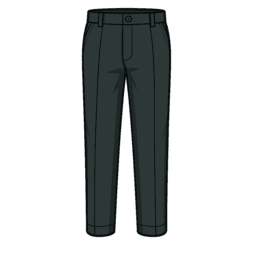
Waist circumference helps determine trouser size and how fitted clothing fits around the midsection.
In men's suits, the difference between jacket chest size and trouser waist size is called the suit drop.
For example, a size 40 jacket paired with size 34 trousers has a suit drop of 6.
Calculate this difference with our Suit Drop Calculator .
For formal waistcoat sizing, try our Vest Size Calculator .
Frequently Asked Questions
Can I calculate chest size without measuring?
Yes. You can estimate chest circumference from height, weight, and age using a statistical model. However, the estimate can differ from your actual body measurement.
How do I calculate chest size from height and weight?
Enter your height, weight, and age into the calculator. It uses a published male chest circumference regression equation to estimate your measurement in inches and centimeters.
Is this chest size calculator for men or women?
This calculator uses a regression model developed for male subjects and provides men's clothing-size estimates. It is not designed to predict women's bust measurements. For women's formalwear, visit our Women's Suit Size Calculator .
How accurate is the chest size estimate?
The published research reported a root mean squared error of approximately 2.47 cm for the male chest circumference regression. This is a statistical measure of model error, not a guarantee of individual accuracy. Actual errors can be larger.
Why does the calculator ask for age?
Age is one of the variables included in the published prediction equation, alongside height and weight.
Does having an athletic build affect chest size?
Yes. Muscle development and body proportions can affect chest circumference. However, the research equation used by this calculator does not include athletic build as a separate input. The estimate may therefore differ from your actual measurement.
Why isn't there a slim, average, or athletic body-type option?
The calculator uses a published statistical model based on height, weight, and age. Adding an arbitrary adjustment for a subjective body-type category could reduce accuracy, so no unvalidated adjustment is applied.
What is the average chest size for a man?
There is no single chest circumference that represents all adult men. Measurements vary with height, weight, build, age, and population. This calculator estimates an individual measurement rather than using one universal average.
What shirt size is a 40-inch chest?
A 40-inch chest falls within the Medium range of the men's top-size reference chart on this page. Actual sizing varies by brand.
What shirt size is a 42-inch chest?
A 42-inch chest falls within the Large range of the reference clothing-size chart. Always check the manufacturer's chart before ordering.
What jacket size is a 40-inch chest?
A 40-inch chest commonly corresponds approximately to a US/UK size 40 suit jacket, or EU size 50. Jacket length and overall fit must be checked separately.
Can two men with the same height and weight have different chest sizes?
Yes. Two men with identical height and weight can have different chest measurements because of differences in muscle development, body proportions, and body composition.
Is the estimated chest size accurate enough for buying a suit?
The estimate is useful as a starting point, but fitted suits require more precise measurements. Measure your chest, shoulders, waist, and sleeve length before purchasing tailored clothing.
Is this calculator suitable for children?
No. This calculator is intended for adults and should not be used to estimate children's chest measurements.
Related Clothing Size Calculators
Your estimated chest measurement can help you choose a starting size for shirts, jackets, and other men's clothing.
For more detailed recommendations, try these sizing tools: